A power cut hits your building mid-evacuation. Corridors go dark. People panic. The difference between a safe exit and a tragedy comes down to one thing, whether your emergency and exit lights were working.
Most building managers in Qatar treat lighting as an afterthought. QCD doesn’t. And neither should you.
Key Takeaways
- Exit lights mark escape routes; emergency lights illuminate them during a power failure.
- Both are mandatory under Qatar Civil Defence (QCD) regulations.
- Certified installation by a QCD-approved provider is a legal requirement.
- Regular testing and maintenance keep systems compliant and occupants safe.
- Technosafe supplies, installs, and maintains emergency & exit lights across Qatar.
Introduction to Emergency and Exit Lights in Qatar
Many building owners use the terms interchangeably, but emergency lights and exit lights are two different systems serving two different purposes.
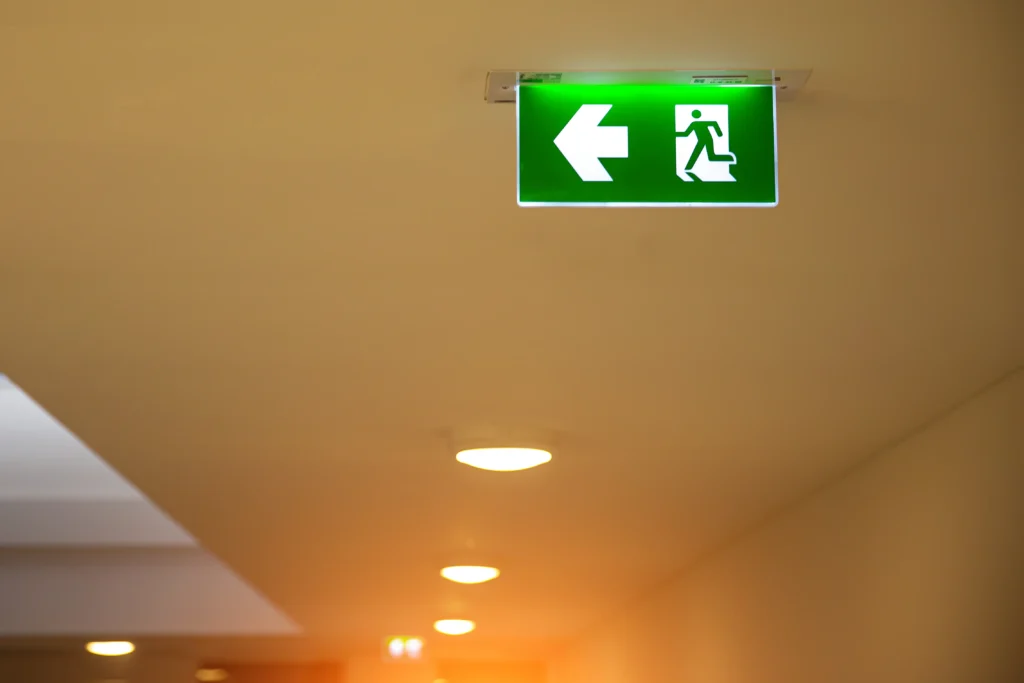
An exit light is a illuminated sign that shows occupants where the nearest escape route is. It is always on. An emergency light activates automatically when mains power fails, flooding corridors, stairwells, and exits with enough light for safe evacuation.
Together, they form the backbone of any building’s life safety system. In Qatar’s commercial towers, hospitals, hotels, and industrial facilities, having certified emergency and exit lights installed correctly is not optional; it is a QCD requirement.
Benefits of Installing Certified Emergency and Exit Lights
Enhanced Occupant Safety During Emergencies
When panic sets in, people move toward light. Properly placed emergency& exit lights guide occupants away from danger instinctively, reducing confusion during evacuations.
Clear Evacuation Routes in Power Failures
Fires frequently cause power outages. Emergency lighting ensures corridors and stairwells remain visible for a minimum duration so everyone can exit safely, even in total darkness.
Compliance with Qatar Civil Defence Regulations
QCD mandates certified emergency and exit lighting in all commercial, industrial, and high-occupancy buildings. Non-compliance risks fines, closure notices, and failed safety audits.
Reduced Risk of Accidents and Injuries
Darkness during an emergency dramatically increases the risk of falls, collisions, and crowd injuries. Adequate lighting keeps evacuation orderly and injuries minimal.
Faster Emergency Response and Evacuation
Well-lit escape routes reduce evacuation time significantly. Every second counts during a fire — and emergency lighting ensures no one is left navigating a dark corridor.
How Emergency and Exit Lights Work During Power Failure
Both systems are connected to a dedicated backup power source — either individual built-in batteries or a centralised Central Battery System (CBS). The moment mains power is interrupted, the system switches to backup power automatically, with zero delay.
Modern LED emergency luminaires are designed to operate for a minimum of one to three hours on battery, giving occupants sufficient time to evacuate and emergency responders time to act.
CBS-based systems are increasingly preferred in larger buildings across Qatar because they allow centralised monitoring, easier maintenance, and better compliance documentation for QCD inspections.
Types of Emergency Lighting Systems in Qatar
Maintained Systems: The light source remains on continuously, functioning as both normal and emergency lighting. Common in public areas and corridors.
Non-Maintained Systems: Only activate when mains power fails. Used in areas that are occupied only when other lighting is present.
Sustained Systems: Use separate lamps for normal and emergency modes within the same fitting, switching automatically during a power failure.
Central Battery Systems (CBS): Power multiple emergency luminaires from one central unit, ideal for large commercial or industrial buildings requiring centralised QCD compliance records.
Qatar Civil Defence Requirements for Emergency and Exit Lights
Qatar Civil Defence enforces strict standards for emergency and exit lighting across all building types. Key requirements include:
- Emergency lighting must activate automatically within five seconds of power failure.
- Minimum illumination levels must be maintained for at least one hour, and up to three hours in high-risk areas.
- Exit signs must be clearly visible from any point along an escape route.
- All systems must be installed by a QCD-approved service provider.
- Regular testing — monthly functional tests and annual full-duration tests — must be documented and available for inspection.
As trusted QCD service providers in Qatar, Technosafe ensures every installation meets these standards and every maintenance visit is fully documented.
Choosing the Right Emergency and Exit Lights Supplier in Qatar
Not every supplier is equipped to handle QCD-compliant installations. When selecting a provider, look for:
- QCD approval: non-negotiable for legal compliance.
- Full-service capability: supply, installation, testing, and ongoing maintenance under one contract.
- Experience across building types: commercial, industrial, hospitality, and residential projects.
- Documented service records: essential for audits and insurance.
Technosafe ticks every box. From certified LED exit signage to full CBS installations, we handle everything, and our work speaks for itself across landmark Qatar projects.
Final Thoughts
Exit lights and emergency lights are not the same thing, but they work together to protect every person inside your building when the unexpected happens. In Qatar’s regulatory environment, getting both right from the start is the only acceptable standard.
Technosafe supplies, installs, and maintains certified emergency and exit lights across Qatar — fully aligned with QCD requirements, built to last, and backed by a team that understands what real fire safety looks like.
FAQ
Yes. Qatar Civil Defence requires certified emergency and exit lighting in all commercial, industrial, and high-occupancy buildings. Non-compliance results in fines and failed safety audits.
Only QCD-approved contractors. Technosafe is a certified QCD service provider qualified to supply, install, and maintain emergency lighting systems across Qatar.
It depends on the building’s size, layout, and occupancy. QCD standards specify minimum illumination levels and coverage distances. Technosafe conducts a full site assessment to determine the correct number and placement.
A minimum of one hour is required under QCD standards, with up to three hours mandated for high-risk or high-occupancy areas. Central Battery Systems are recommended for larger buildings to ensure consistent backup duration.